Hello, World! My name is Evan Li, and this is my first blog. I recently gave a speech at my middle school on how to prepare for exams, as exam week was approaching. After I presented, I got a lot of positive feedback, and I thought that I would condense the information into a blog so any students struggling with exams can use this as a helping hand.
Exams and How to Prepare For Them
Physical Health
- Exercise
Exercising is a crucial part to performing well on an exam. This may seem counterintuitive. Why spend my time exercising when I could be studying? Well, here’s why: Exercise promotes brain function, helps you sleep better, improves memory and learning, and reduces stress. The benefits of even just exercising an hour a day far outweigh the benefits of studying for an extra hour that day. Exercising not only enhances your physical health–it also boosts your mental health as well, which obviously helps your exam performance.
Start today. Don’t just exercise the day before the exam, you should start as soon as you can and hopefully carry on with it for the rest of your life. Exercise can be playing basketball, doing gymnastics, or even just walking. Getting your body moving for 30-60 minutes a day, no matter how small, is essential.
- Sleep
Sleep is also vital for your exam performance because during a phase known as REM sleep, memory consolidation happens. All the studying and learning you did that day is processed by the temporal lobe; the important memories are stored in your long term memory.
In addition to being responsible for memory consolidation, sleep also improves concentration, attention, and even problem solving skills. So, likewise with exercise, try to start sleeping 7-8 hours a day as soon as you can. Also, it’s important to note that your sleep schedule is also important as well. Going to bed at the same time every night aligns your circadian rhythm, increasing your quality of sleep. If you start building consistent sleep habits now, you will absolutely outperform your fellow sleep-deprived exam takers come test day.
Studying Habits
- Procrastination
DO. NOT. PROCRASTINATE. You’ve heard it a million times before, but teachers only keep repeating it because it’s actually true. It is disastrous if you wait until the last minute to start studying. You won’t remember half the things you studied the night before, you’ll be extremely stressed out, and it doesn’t get much better when your teacher hands back a paper with a bad grade at the top.
Now, I know that some students will say to themselves: “What if I’m smart enough to procrastinate?” And I will say, I was definitely one of those students up until high school. During high school, I learned a lesson, and the lesson was this: No matter how smart you are, you will not be able to procrastinate for the rest of your life. You may be able to rely on your talent to get you through middle school, but when high school and college roll around and exams cover hundreds of pages of textbook information, it is physically impossible to cram that into a single night.
My point is, you are doing your future self a HUGE, HUGE favor if you stop procrastinating. It doesn’t matter if you’re smart enough to procrastinate now, you won’t be able to sustain that practice for the rest of your life. So if you’re going to have to develop study habits eventually in life, just do it now. It makes things so much easier. If you start now, your future self will thank you.
- Active Recall
I’ve just ranted about why you should study before the last minute, but I haven’t told you how yet. For your studying strategy, you should take advantage of active recall. Active Recall is repeatedly recalling a piece of information from memory. This process, depending on how many times it is used, will make it easy to store specific information in your brain. Examples of active recall include using flashcards or getting a friend to quiz you.
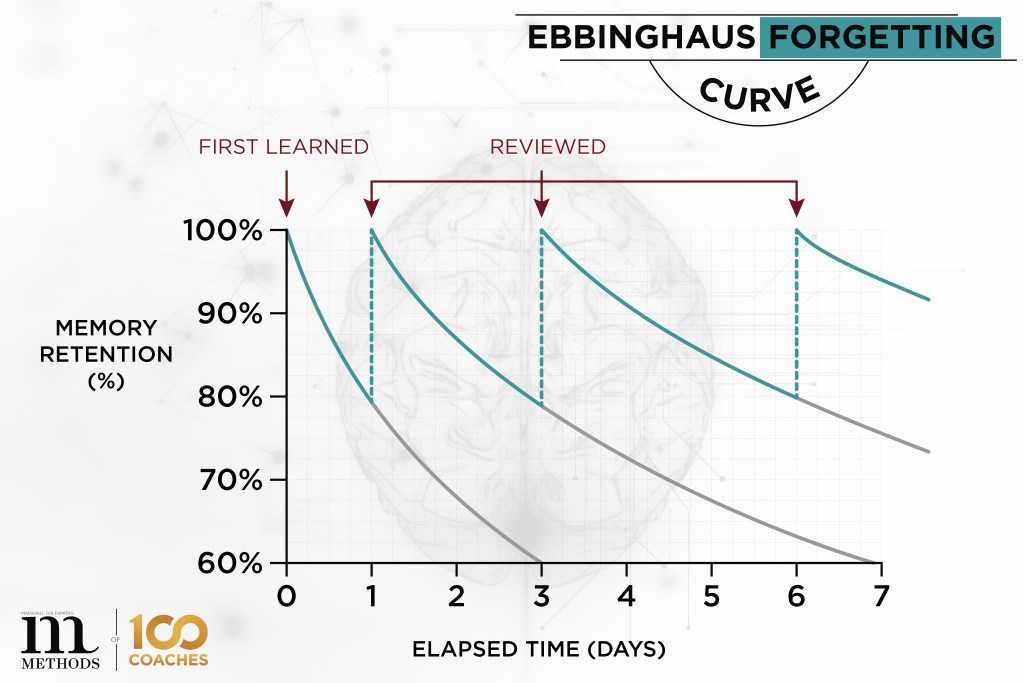
Ebbinghaus Forgetting Curve – It should also be mentioned that the more a piece of information is recalled, the easier it is to remember. That is visualized here in this graph. This makes logical sense. You can remember your name almost instantly because you have actively recalled it thousands of times in your life. It would be extremely difficult for you to forget your name, even if you hadn’t written it down in years.
Tips for Test Day and the Day Before
- Hydrate the day of the exam and the day before. Hydration is key to cognitively performing at your best.
- Be early. This is self-explanatory, but if you’re already nervous about an exam, being late doesn’t help in the slightest.
- Take the night before the exam easy. Do some last minute quick review, watch a movie, read a book, go to bed early, and just relax. Hopefully, you’ve worked hard and studied, so you deserve some rest before you go conquer that exam.
 Youth Health foundation
Leave a comment